Where Did the Word “Breakfast” Come From? Breaking the Fast
 OriginPoint
1
“Breakfast” is one of the most honest words in English — it literally means breaking the fast of the night. Its story runs from Old English “morgenmete” through a duke’s 1463 account book to the modern morning ritual.
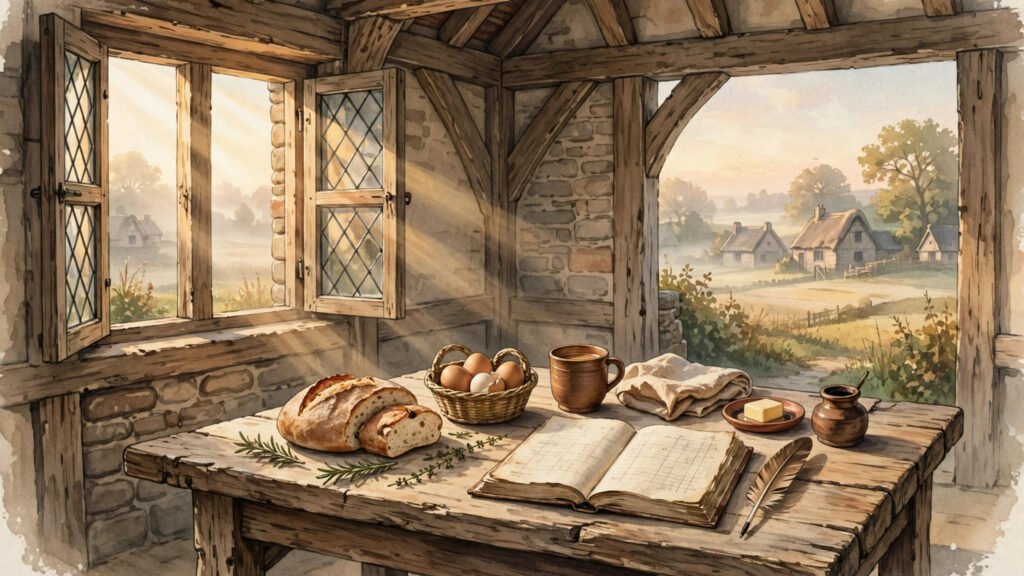
“Breakfast” comes from the Middle English phrase “breken fast” — “to break one’s fast,” or end the night’s abstinence from food. First recorded in the 15th century, it replaced Old English “morgenmete” (“morning meal”) as the name for the day’s first meal. It means exactly what it says: the meal that breaks the fast.
What Is the Origin of the Word “Breakfast”?
The word “breakfast” comes from the Middle English phrase breken fast — “to break one’s fast,” ending abstinence from food. First recorded in the 15th century, it replaced the Old English word morgenmete (simply “morning meal”) as the standard name for the day’s first meal.
That’s the direct answer. Now, the full story.
What Did People Call the Morning Meal Before “Breakfast”?
Before “breakfast” existed, English had morgenmete — Old English for “morning meal.” It was purely descriptive: the food you ate in the morning. It appeared in texts from well before the Norman Conquest, and for centuries it was simply what the first meal of the day was called.
Meanwhile, another word was doing quiet work in the background: dinner. This is the twist most people never hear. The English word “dinner” came from the Gallo-Romance desjunare — Latin for “to break one’s fast.” Around the mid-13th century, that meaning of dinner faded, and the word drifted toward its modern sense of the day’s main meal.
So English carried, at different times, two words built on the idea of breaking a fast. Desjunare gave us “dinner.” Breken fast gave us “breakfast.” One survived in disguise; the other stayed literal. Around the 15th century the new compound “breakfast” moved into written English to describe a morning meal — and morgenmete quietly fell out of use.
Morning Meals Across Languages and Eras
| Language / Era | Term | Meaning / Note |
|---|---|---|
| Old English | morgenmete | morning meal |
| Roman | ientaculum | morning meal |
| Greek | ariston / akratisma | morning meal |
| Spanish | almuerzo | from Latin admorsus |
| German | Frühstück | early bit |
| French | déjeuner | later shifted toward lunch |
| English | dinner, from desjunare | to break one’s fast; meaning shifted in the mid-13th century |
The terms in this table are drawn from Wikipedia and Etymonline, and from the history in the sections above – including dinner’s shift from desjunare, ‘to break one’s fast,’ in the mid-13th century.
When Was the Word “Breakfast” First Written Down?
This is where the documented record gets delightfully specific. The earliest known written use of “breakfast” that etymologist Dave Wilton of Wordorigins.org is aware of sits in the household account books of John Howard, the first Duke of Norfolk, under the year 1463:
Item, the xxij. day off Septembyr, in exspensys in breffast, xj.d.
Translation: on the 22nd day of September, the household spent 11 pence on breakfast. Not a poet, not a playwright — a duke’s accountant. The word’s debut in the historical record is a grocery bill.
Merriam-Webster agrees with the 15th-century dating: Middle English brekfast, “from the phrase breken fast ‘to break one’s fast, end abstinence from food,'” with its first known use in the 1400s.
How Did “Breakfast” Go From Phrase to Single Word?
It followed the classic path of English compounds: a common phrase glued itself together over time. Breken fast — two words describing an action — compressed into brekfast, then breffast (as in the duke’s ledger), and finally the modern breakfast.
The same process produced the verb form. “To breakfast” — meaning to eat a breakfast — shows up in a 1644 pamphlet called Huls Pillar of Providence Erected, an account of the siege of Hull during the English Civil War. The use was metaphorical, describing royalist forces being served defeat by the parliamentary army on 12 October 1642 — they were “breakfasted” with loss. Language had absorbed the word so thoroughly that it could be played with. Etymonline dates the verb form to the 1670s.
Did the Church Shape the Meaning of Breakfast?
Indirectly, yes. In 15th-century Europe, the Catholic Church regulated meal timing for much of the population, and fasting until after Mass was common practice. The first meal of the day genuinely broke a fast — not just the overnight sleep, but often a religiously required abstinence.
This matters because it explains why a phrase like “break the fast” was in everyone’s mouth in the first place. When fasting was a scheduled part of life, the meal that ended it needed a name, and “breakfast” — literal, obvious, honest — fit perfectly. The word wasn’t a clever invention. It was the plainest possible description, and that’s exactly why it stuck.
Why Did “Breakfast” Replace “Morgenmete”?
Here’s the most human part of the story: the two words were never really in competition over what the meal was. They were in competition over how people thought about it.
Morgenmete described the meal by the clock: the morning food. Brekfast described the meal by the body: the end of hunger. As fasting — both overnight and religious — structured daily life, the body-centered word won. People didn’t just eat something in the morning; they ended something. The word carried the feeling of relief in eating after hours without food.
There’s a broader pattern here. English is full of words that won because they said what something felt like rather than what it was. “Breakfast” is one of the oldest and cleanest examples.
A Word That Never Needed a Makeover
Here’s what makes “breakfast” unusual among food words. Most of our meal vocabulary is borrowed and blurred: “lunch” is a shortened, reshaped fragment of “luncheon”; “dinner” kept its spelling but abandoned its meaning entirely. “Breakfast” is the rare word that arrived in 1463 meaning “breaking the fast,” and means exactly the same thing today — over 560 years later, through every change in how, when, and what we eat in the morning.
Even our descendants’ breakfasts — eaten at midnight after night shifts, or skipped entirely for intermittent fasting schedules — still honor the word’s original logic. Every “break” of every “fast” is a tiny echo of a duke’s accountant in 1463, noting 11 pence spent on the meal that ends the night.
Related reading: why we say goodbye, where the word OK came from and where coffee came from.
Frequently Asked Questions
When was the word “breakfast” invented?
The word dates to the 15th century. Its earliest known written appearance is in the 1463 account books of John Howard, first Duke of Norfolk, spelled “breffast.” Merriam-Webster traces it to the Middle English phrase breken fast, meaning “to break one’s fast.”
What does “breakfast” literally mean?
It’s a compound of “break” + “fast” — the meal that ends (breaks) the period of not eating (fasting), usually the overnight sleep. A “fast” is any period of abstinence from food.
What did people call breakfast before the word existed?
In Old English, the morning meal was called morgenmete — literally “morning meal.” Meanwhile, the word “dinner” itself originally came from the Latin desjunare, meaning “to break one’s fast,” before its meaning shifted in the 13th century.
Is “breakfast” really about religious fasting?
Partly. In 15th-century Europe, the Catholic Church required fasting until after Mass, so the first meal of the day genuinely broke a religious fast as well as the overnight one. But the core meaning — ending the night’s abstinence from food — applies to everyone.



1 thought on “Where Did the Word “Breakfast” Come From? Breaking the Fast”