Why Do We Say “Break a Leg”? The Theatre Superstition Behind the Phrase
 OriginPoint
0
Actors say “break a leg” instead of “good luck” because theatre folk believe a direct wish for luck invites bad luck — and the phrase itself probably travelled from a Yiddish blessing, through German pilots, onto the Broadway stage in the 1920s.
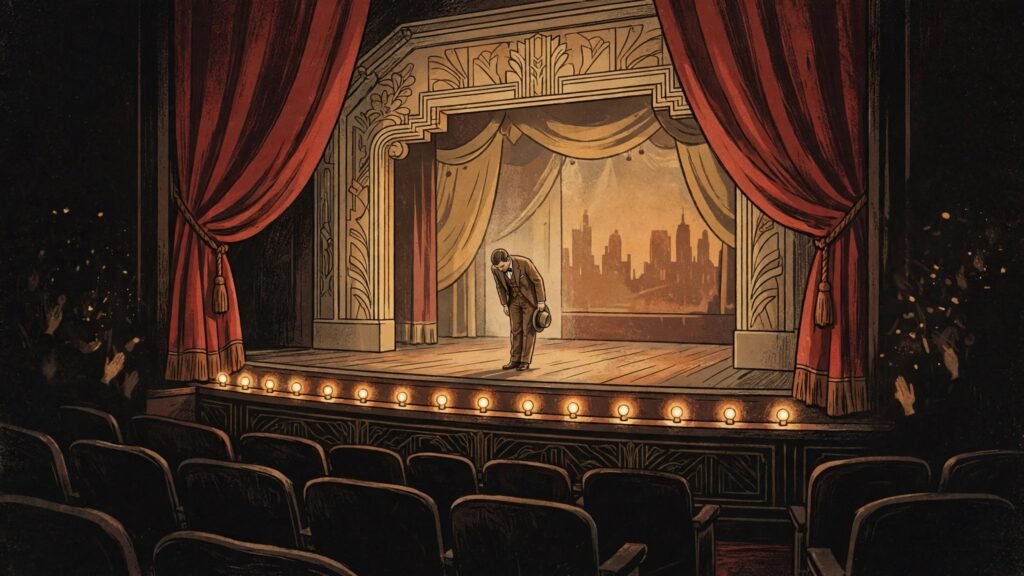
“Break a leg” means “good luck” — but only in the theatre, where saying “good luck” itself is considered bad luck. Actors wish each other a broken leg before a performance because theatre people are famously superstitious, and a wish for the opposite of what you want is supposed to fool fate. The phrase is barely a century old: the first clear printed examples date to the 1920s and 1930s, and its most likely ancestor is a Yiddish blessing that sounded, to German ears, like “break your neck and leg.”
The origin of ‘break a leg’ is a story where the literal meaning is the opposite of what the speaker means.
What does “break a leg” actually mean?
In the theatre, “break a leg” is the standard way to wish a performer well before a show. Nobody means it literally — the actor who hears it is supposed to have a great night.
The rule it obeys is older than the phrase itself. Theatre people — like sailors, gamblers, and jockeys — have long believed that naming good fortune out loud tempts fate to take it away. The French have the same instinct: before a performance, French actors say “merde!” to each other, for exactly the same reason. Wishing someone well in plain words is, in this worldview, reckless. You wish them the opposite, and the gods leave them alone.
When did actors start saying “break a leg”?
The phrase is far younger than the theatre. The earliest published example in a theatrical context comes from the American writer Edna Ferber’s autobiography, A Peculiar Treasure (1939). Describing a dress rehearsal, Ferber wrote of “all the understudies sitting in the back row politely wishing the various principals would break a leg.” By 1939, the phrase was already familiar enough to need no explanation — and the American playwright Bernard Sobel confirmed the rule in The Theatre Handbook and Digest of Plays (1948): before a performance, actors never wish each other good luck, but say “I hope you break a leg.” Anecdotal evidence from theatrical memoirs and letters pushes the phrase back into the 1920s.
The very earliest trace comes from horse racing. In October 1921, the Irish writer Robert Wilson Lynd wrote in the New Statesman that to wish a man luck on his way to a race was considered unlucky — “you should say something insulting such as, ‘May you break your leg!'” Lynd meant jockeys, not actors — but the phrase was already an insult that was really a blessing.
So the honest answer is: some time in the 1920s, among American theatre people. It did not become widely known outside the profession until the 1950s, and anyone who tells you it is Elizabethan or ancient Greek is repeating a story the printed record does not support.
Why would anyone wish a broken leg on a friend?
The superstition theory — the one with the strongest evidence — is that “break a leg” is a deliberate piece of reverse psychology aimed at fate. Directly wishing a performer good luck was believed to draw the attention of hostile spirits or jealous gods. Say the opposite, and you slip past them unnoticed. The same logic appears in folk customs everywhere: knocking on wood after boasting, never wishing a fisherman luck before he sails.
There is a second reason the phrase fits the stage: a leg is theatre vocabulary. In stagecraft, the “legs” are the tall curtains at the sides of the stage that mask the wings, and to step past them is to step onto the stage itself. Some historians have suggested that to “break a leg” once meant to break through that line — to get on stage at all, which for an understudy was the whole dream. It is a neat theory, but no contemporary document proves it.
Did the phrase come from German?
Here is the story’s most likely answer. Long before English-speaking actors said “break a leg,” German speakers were wishing each other “Hals- und Beinbruch” — literally “neck and leg break” — as a way of saying good luck. German pilots in the First World War used it to wish each other safe flights.
Where did the Germans get it? The leading theory is that it came from Yiddish: the blessing “hatslokhe un brokhe” — from the Hebrew hatzlacha u-bracha, “success and blessing” — sounds, to a German ear, remarkably like “Hals- und Beinbruch.” A blessing, misheard across languages, became a wish for broken bones.
From there, the path to Broadway is short. In the 1920s, German-speaking Jewish performers were arriving in American entertainment in large numbers, bringing Yiddish theatre traditions into vaudeville and Broadway. The phrase was translated literally into English as “break a leg,” and American actors, already steeped in the superstition that you never say “good luck,” adopted it as their own. The chronology fits: a German phrase in use by the First World War, an American one by the 1920s and 1930s. No other theory explains the wording so neatly — though it is still a theory, not a proven fact, and etymologists argue about it to this day.
Is it true about John Wilkes Booth?
No — and this is the theory most often repeated. The story goes that John Wilkes Booth, the actor who assassinated President Abraham Lincoln at Ford’s Theatre in 1865, broke his leg leaping onto the stage. It is a dramatic story, and it is false.
Booth did break his leg that night. But actors did not start wishing each other to “break a leg” until the 1920s, more than fifty years later. If the phrase had come from Booth, it would have appeared in theatrical writing in the 1860s, 1870s, or 1880s. It does not appear anywhere until the twentieth century. The Booth theory is a folk etymology: a good story invented after the fact to explain a phrase whose real origin had already been forgotten. The same goes for the claim that the phrase comes from Shakespeare’s time, or from ancient Greek actors. There is no record of any of it. The phrase is modern — a product of twentieth-century American theatre, not of antiquity.
How did “break a leg” escape the theatre?
For its first few decades, “break a leg” stayed backstage. It only became known to the general public in the 1950s, as theatre slang seeped into films, television, and everyday speech. From there it spread far beyond its original home: today people say it before exams, job interviews, wedding speeches, and first dates. It travelled the same road as “hello”, which went from a shouted hail to the world’s greeting in a single generation — but by word of mouth, not by telephone. A backstage whisper, possibly misheard from a Yiddish blessing, is now something a parent says to a child before a school play.
So the next time you hear it in the wings, you are repeating a piece of twentieth-century history: a blessing that crossed three languages and still means the exact opposite of what it says.
Frequently Asked Questions
What is the origin of “break a leg”?
The phrase first appeared in print in the 1920s and 1930s; the earliest theatrical example is Edna Ferber’s 1939 autobiography A Peculiar Treasure. The most likely origin is the Yiddish blessing hatslokhe un brokhe (“success and blessing”), which sounded like the German Hals- und Beinbruch (“neck and leg break”) and was translated literally into English in American theatre.
Why do actors say “break a leg” instead of “good luck”?
Theatre people are famously superstitious: wishing someone good luck directly is believed to invite bad luck. Saying the opposite is meant to fool fate. The same logic lies behind the French theatrical greeting “merde!”
Did John Wilkes Booth invent the phrase “break a leg”?
No. Booth did break his leg after assassinating Abraham Lincoln in 1865, but the phrase does not appear in print until the 1920s — a folk etymology invented after the fact.
Does “break a leg” have anything to do with bowing?
Possibly, but it is unproven. One theory holds that a bow “breaks” the straight line of the leg at the knee, and another notes that stage “legs” are the side curtains. Neither is supported by contemporary documents; the superstition explanation has the strongest evidence.