Why Do We Say “Cheers” and Clink Glasses? The 800-Year Story Behind the Toast
 OriginPoint
0
“Cheers” is barely a century old as a toast — but the word behind it is 800 years old, and the clink of glasses has no single documented origin at all.
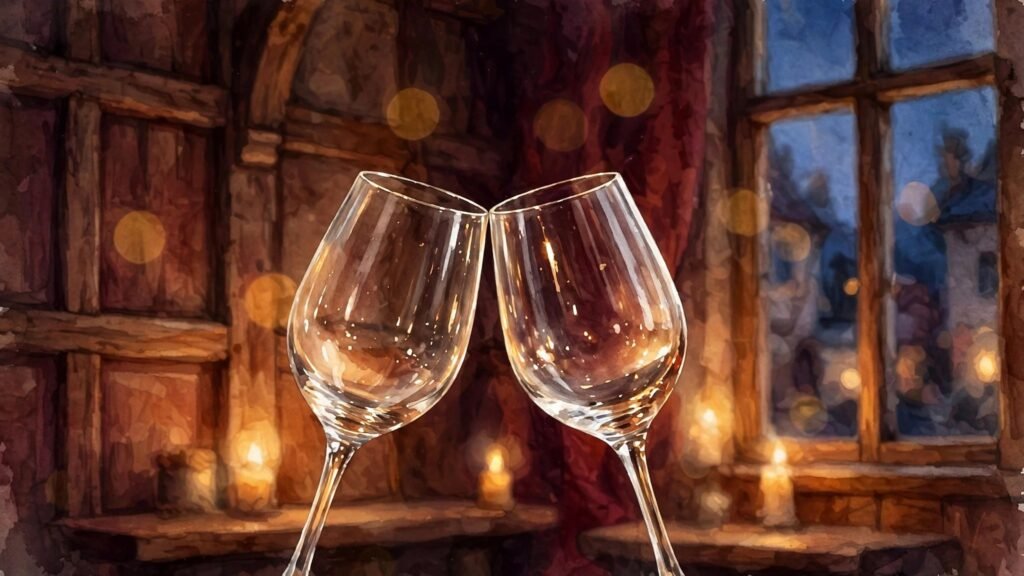
We say “cheers” and clink glasses because we are performing a ritual far older than the word itself. “Cheers” as a drinking toast is barely a century old — the Oxford English Dictionary traces it to the early twentieth century — but the word behind it comes from a medieval French word for “face”, and the habit of drinking to someone’s health reaches back to the ancient Greeks and Romans. The clink, meanwhile, has no single documented origin at all: the famous poison story is almost certainly a myth.
So tonight’s toast is three histories layered together: an ancient drinking ritual, a medieval word for a happy face, and a modern habit of knocking glasses together — and the most popular explanation for the clink is the one with the weakest evidence.
Where does the word “cheers” come from?
“Cheers” began, improbably, as a word for a face. It comes from the Anglo-French word chiere, meaning face, expression, or mood, which entered English in the late twelfth or early thirteenth century. To be “of good cheer” originally meant to wear a glad expression — the face came first, the feeling second.
Over the centuries the word travelled. By the fifteenth century, “cheer” had come to mean the food and drink laid on for a guest at a feast. In the early eighteenth century it became a shout of encouragement: the Oxford English Dictionary’s first citation for that sense is from 1707, when the satirist Edward Ward wrote of a boatswain commanding “three Chears from the Company”. By the late Victorian era, “cheer” had produced the greeting cheero, which by 1918 had become cheerio.
“Cheers” as a toast is the youngest member of the family. Etymologists date the drinking salute to 1919, and the Oxford English Dictionary’s earliest citation comes from a newspaper in Perth, Australia — the Sunday Times of September 14, 1930, which recorded “the brief toast of ‘Cheers, dears!'”. The dictionary cautions that the earliest use traced so far comes from Australia, but it is uncertain whether the word actually originated there.
Before the First World War, English speakers had no single word for raising a glass. Victorians said “Your health and my service to you” — Thackeray uses exactly that in The History of Pendennis (1850) — or “Here’s toward her!”, as Dickens writes in Bleak House (1853). “Cheers” swept all of that aside: short, warm, and doing double duty, since in Britain it soon also came to mean “thank you” and even “goodbye”.
How old is the toast itself?
Much older than the word. Drinking to someone’s health is one of the oldest social rituals we have, its origins older than any surviving record. The ancient Greeks poured libations, tipping a little wine onto the ground for the gods, and the Romans drank to the health of the emperor and of absent friends. The Latin prosit — “may it be good for you” — survives today as the German toast, Prost.
England had its own ancient toast long before “cheers”: wassail. It comes from the Old English greeting wæs hāl, meaning “be well” — the same root as the Norse ves heill. You can find the greeting in Beowulf, where the hero greets King Hrothgar with “Wæs þū, Hroðgar, hāl”. By the twelfth century, wassail had become a call-and-response toast: one drinker cried “Wassail!” and the other answered “Drinkhail!” — be well, and drink well in return.
The first written version of that exchange comes from Geoffrey of Monmouth’s Historia Regum Britanniae, published in 1136, in which the Saxon princess Rowena kneels before the British king Vortigern, presents him with a cup, and proclaims “Lauerd king, wassail”. Geoffrey set his story in the fifth century, and earlier accounts of the scene mention no drinking invocation at all — so the tale is legend rather than history. But the wassail toast itself was certainly real by the twelfth century, and it survives in the carol “Here We Come A-Wassailing”.
Why do we call it a “toast”?
The word “toast” comes from an actual piece of toast. In sixteenth- and seventeenth-century England, it was common to drop a piece of spiced or lightly charred bread into a cup of wine — the bread was thought to improve the flavour, or to take the edge off a wine that had gone slightly flat. Shakespeare mentions the practice in The Merry Wives of Windsor, when Falstaff calls for a quart of wine and says, “put a toast in it”.
The drink took the name of the bread floating in it; then the person whose health was being drunk became the toast of the evening — the one being honoured, like the seasoned morsel in the cup. By the time Shakespeare wrote Romeo and Juliet in 1597, the formula “Here’s to my love” was already in use.
Why do we clink glasses?
Here is the honest answer: nobody actually knows. The clink has no single documented origin that historians agree on, and the most popular explanation is the one with the thinnest evidence behind it.
The story almost everyone has heard is the poison theory: medieval drinkers clinked cups hard enough to splash a little wine from each glass into the other, proving neither drink was poisoned. It is vivid and widely repeated — and, according to Snopes and the historians who have examined it, almost certainly false. Toasting predates individual glasses: in the ancient world people drank from shared vessels, so there was nothing to clink. And poisonings, though real, were never so routine that every dinner needed a built-in test.
Two other theories compete with it. One says the clink completes the five senses: a toast already involves sight, smell, taste, and touch, and the sound adds hearing. It is elegant and often repeated in etiquette writing, but it cannot be traced to any specific source. The other says the ringing sound frightened away evil spirits, which medieval Europeans believed lurked in alcohol. That belief was real — but no record ties it to the clink.
The most likely truth, argued by the food historian Margaret Visser, is more practical. The delicate clink probably became fashionable in the seventeenth century, when Venetian glassmakers perfected clear, resonant crystal that rang beautifully when struck. Before that, drinkers used heavy pewter, wood, or horn, which do not clink so much as thunk. Fine glass gave the toast a sound worth making — and the gesture spread, preserving the communal spirit of shared drinking now that everyone drank from their own cup.
Most other languages wish the drinker well rather than naming the drink: the French say santé, the Spanish salud — both “health” — the Germans Prost, from the Latin prosit, and the Scandinavians skål, from the Old Norse word for a cup. English is the odd one out: our toast names a face, the cheerful expression of the person across the table.
Frequently Asked Questions
When did people start saying “cheers” as a toast?
“Cheers” as a drinking toast dates to 1919, and the Oxford English Dictionary’s earliest citation is from a Perth newspaper in 1930. Before that, English speakers toasted with phrases like “Here’s to you” or “Your health” — there was no single word for it.
Where does the word “cheers” come from?
It comes from the Anglo-French word “chiere”, meaning face or expression, which entered English in the late twelfth century. “To be of good cheer” originally meant to wear a glad face; the word later came to mean food and drink at a feast, then a shout of encouragement, and finally a toast.
Did clinking glasses really start as a poison test?
Almost certainly not. The poison theory is the most popular explanation, but historians have found no evidence for it — toasting predates individual glasses, since ancient drinkers shared vessels. The likeliest explanation is that the clink became fashionable in the seventeenth century, when Venetian crystal made a pleasing ring.
Why is it called a “toast”?
Because of an actual piece of toast. In sixteenth- and seventeenth-century England, a piece of spiced or charred bread was dropped into wine to improve its flavour. The drink took the name of the bread, and the person being honoured became “the toast of the evening”. Shakespeare mentions the practice in The Merry Wives of Windsor.