Why Do We Blow Out Birthday Candles? The 2,000-Year-Old Wish
 OriginPoint
0
We blow out birthday candles because of a German tradition that grew from an old Greek offering — a wish, sealed in smoke, that travelled from moon cakes in ancient Greece to 18th-century German children’s parties and then to the whole world.
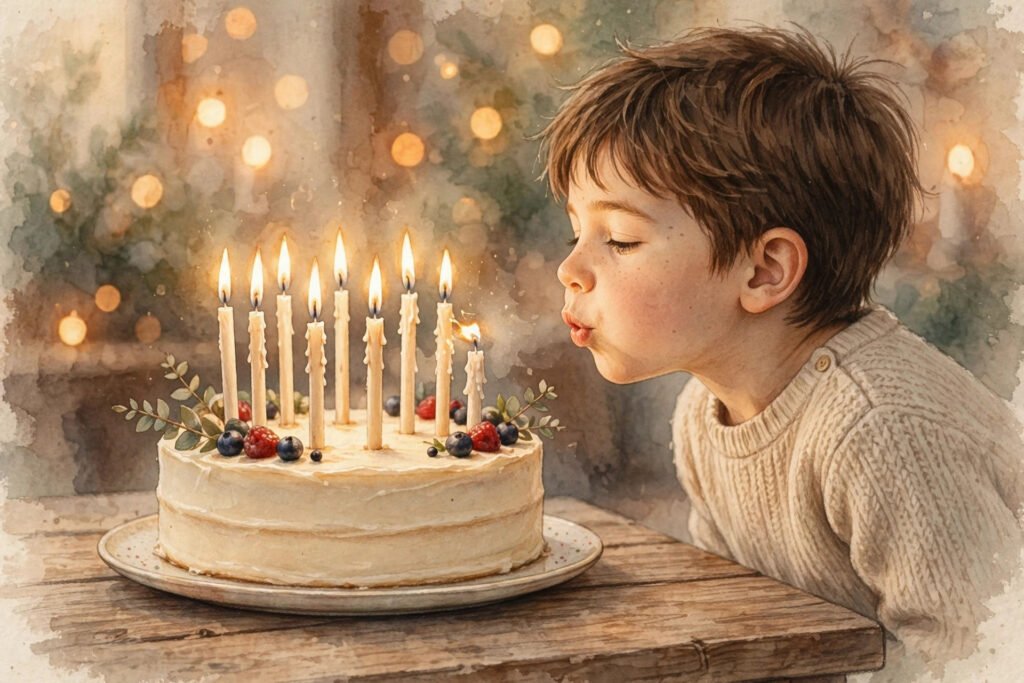
Why do we blow out birthday candles? We blow out birthday candles because the smoke was once believed to carry a wish up to the gods — an idea that began with the ancient Greeks, who topped round cakes with lit candles as offerings to the moon goddess Artemis, and was turned into a birthday ritual by 18th-century Germans, who lit a candle for every year of a child's life and had the child blow them all out in one breath while making a silent wish.
It is one of the most universal gestures in the world, performed at kitchen tables and in restaurants on every continent, and yet almost nobody at the table knows where it came from. The answer is not one tradition but two, layered on top of each other across more than two thousand years: a Greek offering and a German children's party.
Did the ancient Greeks put candles on birthday cakes?
The oldest thread of the story starts in ancient Greece, where the round cake topped with candles was an offering to Artemis, goddess of the moon and of hunting. The Greeks baked round cakes in her honour — round like the moon itself — and set them alight with candles so that they glowed like the moon. The smoke rising from the flames, the story goes, was believed to carry prayers and wishes upward to the gods.
How solid is this? It is the story that historians of the custom most often repeat, and it fits what we know of Greek religious practice — offerings of cakes to the gods were common, and Artemis was associated with the moon. But the honest limit is that no surviving Greek text spells out the birthday-candle ritual in the form we know it. The connection is a traditional account, passed down through later writers, rather than a documented eyewitness record. What the Greek story gives us is the idea itself: a cake, candles, and smoke carrying a wish to the heavens. That idea would resurface, centuries later, in a very different place.
The candle ritual, then, is not as old as birthday parties themselves. It is an old idea attached to a much newer party.
How did Germany turn candles into a birthday ritual?
The decisive chapter belongs to Germany, and here the record is firm. In the 18th century, German families celebrated children's birthdays with a festival called Kinderfest. The earliest detailed account comes from 1746, when Count Ludwig von Zinzendorf, a German religious leader, held a birthday celebration that was described in writing: a huge cake was brought in, decorated with candles — one for each year of his life, plus one extra candle for the year to come — and the candles were lit in the morning and kept burning all day.
In the early Kinderfest, the candles burned throughout the day, and the child blew them out at the end of the celebration, after making a wish. Over time, the ceremony compressed: the candles were lit when the cake arrived at the table, the guests sang, the birthday child made a silent wish, and the flames were blown out in one go. If all the candles went out in a single breath, the wish was said to come true — and if you told anyone what you had wished for, it would not.
The extra candle is the part of the tradition that survives most visibly today. The "one for good luck" or "one to grow on" candle that many families still add is a direct descendant of the Zinzendorf account: one candle per year lived, plus one for the life still ahead. The German tradition also explains why the number of candles matters so much to us — they are a count of years, not decoration.
Why do we blow out birthday candles and make a wish?
The wish is the Greek idea returning through a German filter. The old belief — that smoke carries a wish upward — had never entirely disappeared from European folk belief, and it attached itself naturally to the birthday cake. The ritual as we know it has three unwritten rules, and each one has a logic in that old belief: make the wish silently, because a spoken wish loses its power; blow out all the candles in one breath, because the wish travels on the smoke of them all together; and keep the wish secret afterwards, because telling it breaks the spell.
None of this was ever church doctrine or royal decree. It was folk custom, passed from family to family, which is why it varies so much from place to place and why no single document can be pointed to as "the" origin. The wish-making candle is a piece of folk religion that outlived the religion it came from.
How did the tradition spread around the world?
The birthday cake with candles travelled out of Germany in the 19th century, carried largely by German immigrants to America. By the early 20th century, the candle-topped cake was becoming the standard birthday image in the United States, helped by the growing bakery and greeting-card industries, which found the candlelit cake a perfect picture to sell. The birthday song — "Happy Birthday to You," written by the Hill sisters in Kentucky in 1893 and originally a classroom greeting — gave the ritual its soundtrack, and by the 1930s and 1940s, the lit cake, the song, and the blown-out wish were the standard American birthday.
From America the custom spread everywhere, carried by films, television, and migration. Today, versions of the candle ritual appear in birthday celebrations from Tokyo to São Paulo, often in countries where birthdays were not traditionally celebrated at all. The German cake with its counted candles proved remarkably portable: it needs no translation, and its meaning — another year, another wish — is understood at once.
Why does blowing out birthday candles still feel magical?
Blowing out birthday candles survives because it is the rare ritual that does three things at once. It counts the years, which makes time visible. It gives the birthday person a moment of power — everyone watches, everyone is quiet, and for one breath the room belongs to them. And it lets everyone in the room believe, for a second, in a wish. That is why we blow out birthday candles: a tradition that started with a Greek offering and a German children's party is now practised on every continent.
The next time you lean over a cake, remember: the flames are the newest part. The wish is the oldest.
Frequently Asked Questions
Why do we blow out birthday candles?
We blow out birthday candles because of a German tradition, Kinderfest, in which a birthday cake was topped with one candle for every year of the child's life plus one extra. The child made a silent wish and blew them all out; the belief was that if all the candles went out in one breath, the wish would come true. The idea of smoke carrying a wish upward traces back further, to ancient Greek offerings to the moon goddess Artemis.
Where did birthday candles originate?
The earliest recorded birthday cake with candles is from Germany in 1746, at Count Ludwig von Zinzendorf's birthday, where a large cake was decorated with candles — one per year of life, plus one more. An older Greek tradition of placing lit candles on round cakes as offerings to Artemis is often cited as the custom's deeper root, though it is a traditional account rather than a documented eyewitness record.
Why is there one extra candle on a birthday cake?
The extra candle comes from the German Kinderfest tradition: one candle for each year lived, plus one more candle for the year to come — sometimes described as "one for good luck" or "one to grow on." The practice survives in many families today.
What happens if you don't blow out all the birthday candles?
According to the folk belief behind the ritual, the wish only comes true if all the candles go out in a single breath — and the wish must be kept secret, or it will not come true. In practice, relighting a missed candle and trying again is part of the fun.