Who Invented the Fortune Cookie? The California Claim — Hagiwara vs. Jung
 OriginPoint
0
The fortune cookie was not invented in China — it was born in California in the early 1900s, from a Japanese tea-garden cookie, with San Francisco and Los Angeles both claiming the credit.
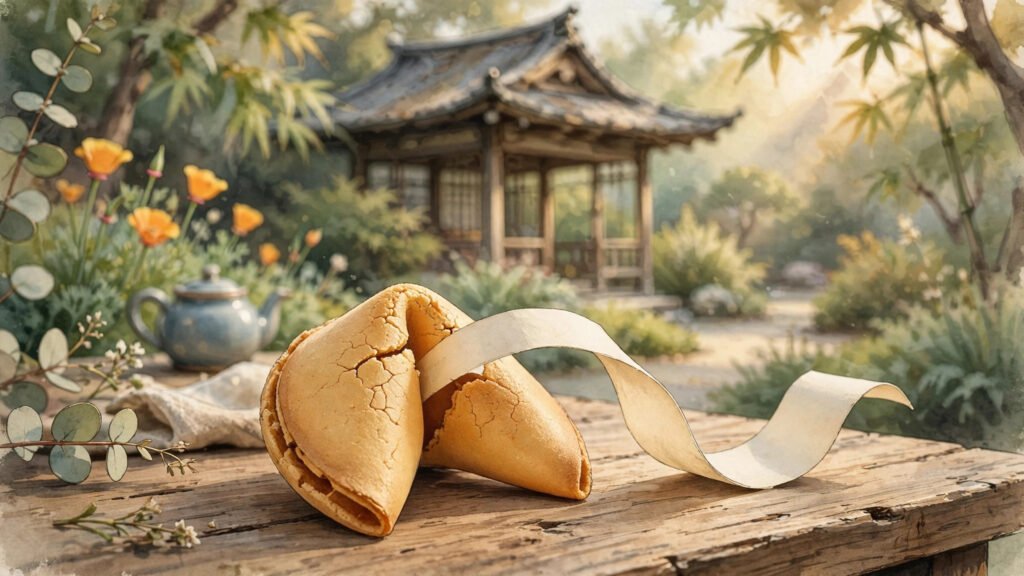
Who invented the fortune cookie? The answer is that no one person in China did: it was invented in California in the early 1900s, most likely by Japanese immigrants, and San Francisco and Los Angeles fought over the credit until a mock courtroom verdict in 1983. It is an American invention that later became a symbol of Chinese restaurants.
That last twist is the first thing to get straight. If you order a fortune cookie in Beijing today, you will probably be met with a blank stare. The crisp, vanilla-scented wafer with a slip of paper inside is rarely served in China, except in restaurants aimed at tourists. In the United States, though, it is the ritual ending to millions of meals — cracked open at the table, the fortune read aloud, the lucky numbers pondered. How a cookie that is not Chinese at all came to stand for Chinese food is a story of immigration, war, and one very Californian court case.
Where did the fortune cookie really come from?
The trail leads back not to China, but to Japan — specifically to a cookie called tsujiura senbei, made in the Kyoto area in the 19th century. These were larger and darker than the modern fortune cookie, flavoured with ingredients such as miso and sesame rather than vanilla, and the fortune was not sealed inside a hollow wafer but tucked into the cookie’s fold, where it could be read without breaking anything. They were sold at tea houses and shrines, a small edible souvenir with a message attached.
That detail matters, because it is the strongest evidence in the whole dispute. In the early 2000s, Japanese researcher Yasuko Nakamachi traced tsujiura senbei back through Japanese records and found fortune-bearing cookies being made in Japan decades before they appeared in America. Her work, later popularised in Jennifer 8. Lee’s book The Fortune Cookie Chronicles (2008), shifted the scholarly consensus: whatever happened in California, the idea itself was Japanese. The fortune cookie did not spring from a Chinese tradition; it travelled from Japan to California with Japanese immigrants, and only afterwards picked up a Chinese identity.
Who invented the fortune cookie — Hagiwara or Jung?
California offers two rival inventors, and both stories are worth hearing, because each city still defends its man.
The San Francisco claim belongs to Makoto Hagiwara, a Japanese immigrant who became caretaker of the Japanese Tea Garden in Golden Gate Park. According to the San Francisco version, Hagiwara served fortune cookies at the Tea Garden in the early 1900s — some accounts say as a thank-you to visitors who had supported him, others that he adapted the Japanese senbei he knew from home for American visitors. His descendants kept the story alive, and the Tea Garden still sells fortune cookies today, leaning proudly into its claim as their birthplace.
The Los Angeles claim belongs to David Jung, a Chinese immigrant who founded the Hong Kong Noodle Company in Los Angeles. Jung’s story, dated by his supporters to 1918, is the warmer of the two: seeing poor and unemployed people gathered near his noodle factory, he began handing out cookies containing slips of paper with encouraging, almost biblical messages, to lift their spirits. From that charitable gesture, the story goes, a business grew — the Hong Kong Noodle Company began making fortune cookies commercially.
So who invented the fortune cookie? Honestly, the documented record will not settle it cleanly. Both men were real, both were making fortune-bearing cookies in California in the early 1900s, and neither left the kind of dated patent or first-batch receipt that would end the argument. What the evidence does suggest is that Hagiwara’s version is closer to the Japanese original, while Jung’s version helped turn the cookie into a commercial product. The two claims may even describe the same idea arriving twice — once through a Japanese tea garden, once through a Chinese noodle company — in a state where both communities lived side by side.
How did a court settle the fortune cookie fight?
In 1983, San Francisco staged a mock trial — the Court of Historical Review — to decide which city owned the fortune cookie. Lawyers argued both cases, and the judge ruled for San Francisco and Makoto Hagiwara. The ruling, being a mock trial, settled nothing legally, but it gave the story its most quotable chapter: a food’s birthplace decided in court, like a custody case over a cookie.
There is a serious footnote to that playful trial, though. The fortune cookie’s path from Japanese tea gardens to Chinese restaurants runs straight through the Second World War. Before the war, fortune cookies in America were largely made and sold by Japanese businesses. When Japanese Americans were forcibly interned from 1942, their businesses — including cookie makers — collapsed or were taken over. Chinese-owned restaurants and bakeries, which were not subject to internment, stepped into the gap. They kept making the cookie, kept serving it after meals, and within a generation, diners assumed it had always been Chinese.
How did the fortune cookie become a mass-produced ritual?
For decades, fortune cookies were folded by hand — a skilled, fiddly job, because the wafer must be shaped in the few seconds before it cools and hardens. That bottleneck broke in the 1960s, when automated machinery arrived: San Francisco’s Lotus Fortune Cookie Company, run by Edward Louie, developed a machine that could fold and insert fortunes at speed. Suddenly a handcrafted novelty could be made by the millions.
Today the scale is staggering: around three billion fortune cookies are made each year, most in the United States, and the largest manufacturer, Wonton Food Inc. of Brooklyn, New York, turns out more than four million a day. The fortunes have changed too — early slips carried proverbs and verses from scripture, later ones added lucky numbers and jokes, and modern fortunes are deliberately vague enough to feel personal.
There is also an older legend that sometimes gets folded into this story and should be kept separate. In 14th-century China, the story goes, rebels against Mongol rule hid messages coordinating an uprising inside mooncakes. It is a vivid tale, and mooncakes really are a Chinese tradition — but historians have found no solid evidence linking that legend to the fortune cookie, and the documented trail runs through Japan, not through a Mongol-era uprising. The mooncake story explains why a message inside food feels plausible; it does not explain the fortune cookie.
So the fortune cookie’s origin is a small lesson in how food history actually works. It was not invented in the country most people associate it with, its inventor is disputed between two Californian cities, its true ancestor is a Japanese tea-house cookie, and its Chinese identity was fixed by the tragedy of wartime internment. Crack one open tonight and the fortune inside may be generic — but the cookie itself carries a genuinely surprising history.
The fortune cookie story at a glance
| Detail | At a glance |
| Japanese ancestor | Tsujiura senbei, Kyoto area, 19th century |
| San Francisco claim | Makoto Hagiwara, Japanese Tea Garden, early 1900s |
| Los Angeles claim | David Jung, Hong Kong Noodle Company, 1918 |
| 1983 verdict | Mock courtroom verdict for San Francisco and Hagiwara |
| Mass production | Hand-folded until 1960s automated machinery; around 3 billion made each year |
| Restaurant ritual | Ritual ending to meals in United States Chinese restaurants |
More origin stories: Who invented the zipper, Origin of the croissant, Who invented the sandwich.
Frequently Asked Questions
Who invented the fortune cookie?
No single inventor is proven. The two leading claimants are Makoto Hagiwara of San Francisco’s Japanese Tea Garden and David Jung of Los Angeles’s Hong Kong Noodle Company, both active in the early 1900s. A 1983 San Francisco mock trial ruled for Hagiwara, but the dispute is not legally settled.
Are fortune cookies Chinese?
No — they are an American invention with Japanese roots. The ancestor cookie, tsujiura senbei, came from Japan, and the fortune cookie itself was created in California. It became associated with Chinese restaurants after the Second World War, when Chinese businesses took over production from interned Japanese Americans.
What was the original fortune cookie like?
The Japanese ancestor, tsujiura senbei, was larger and darker than today’s cookie, flavoured with miso and sesame, and the fortune was tucked into its fold rather than sealed inside. The modern version is lighter, vanilla-flavoured, and folded into its familiar crescent shape around the slip.
Why are fortune cookies served in Chinese restaurants?
Because after Japanese Americans were interned during the Second World War, Chinese restaurants and bakeries took over making and serving the cookie. Diners came to associate it with the end of a Chinese meal, and the association stuck — even though the cookie was never a traditional Chinese food.