Who Invented the Sandwich? The Earl, the Cards, and the Midnight Snack
 OriginPoint
1
The sandwich is named after John Montagu, the 4th Earl of Sandwich — but he did not invent eating food between slices of bread. Here is the documented story behind the name.
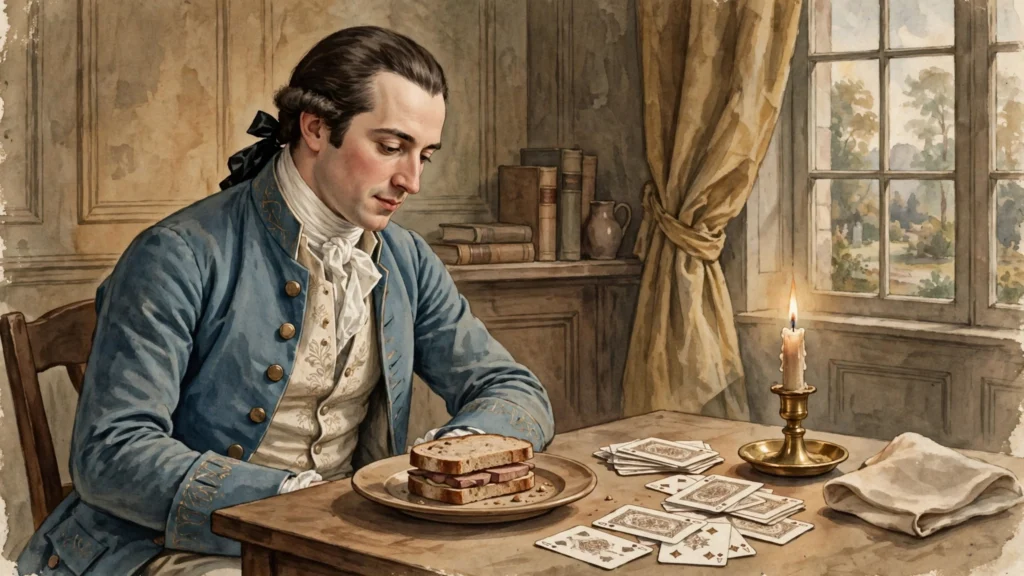
The sandwich was not invented by one person in a single moment. It is named after John Montagu, the 4th Earl of Sandwich (1718–1792), an English aristocrat whose habit of eating cold meat between slices of bread at the gaming table gave the dish its name in 1760s London — though people had been eating fillings tucked into bread for centuries before him.
Who was the Earl of Sandwich?
John Montagu became the 4th Earl of Sandwich in 1729, when he was just ten years old, succeeding his grandfather. He grew up to become a prominent public figure: First Lord of the Admiralty, Secretary of State, and the sponsor of Captain James Cook’s Pacific voyages. Cook repaid the patronage by naming the Hawaiian Islands the Sandwich Islands in the Earl’s honour — a name they kept until the late 19th century.
But it is not naval administration or Pacific exploration that made Montagu immortal. It is supper.
Did the Earl really invent the sandwich at a card table?
The famous story goes like this: the Earl was deep in a card game, unwilling to leave the table, and asked for meat served between two slices of bread so he could eat with one hand, keep his cards clean, and never pause the game. His fellow players saw the convenience, began ordering “the same as Sandwich,” and a name was born.
The story comes to us mainly through Pierre-Jean Grosley, a French travel writer who visited London in 1765 and published his account, Londres, in 1770 (translated into English as A Tour to London in 1772). Grosley described a minister of state who “passed four and twenty hours at a public gaming-table” with no other refreshment than “a piece of beef, between two slices of toasted bread.” Grosley did not name the Earl directly, but Montagu was the minister who fit the description, and readers connected the dots.
The earliest written use of the word “sandwich” for the food comes even slightly earlier. On 24 November 1762, the historian Edward Gibbon — later famous for The History of the Decline and Fall of the Roman Empire — wrote in his journal about men at the Cocoa Tree Club in London “supping at little tables, upon a bit of cold meat, or a Sandwich.” By the early 1760s, in other words, the Earl’s name was already attached to the dish in fashionable London circles.
Was the card-table story actually true?
Here is where honest history gets interesting: the card-table tale may be more legend than fact. Grosley was writing satire as much as travelogue, poking fun at English habits, and his account is the only contemporary source for the 24-hour gambling session. The Earl’s biographer, naval historian Nicholas A. M. Rodger, offers a different explanation: Montagu’s long hours at his Admiralty desk, not the gaming table, were the likelier setting. A busy minister eating at his work table, without cutlery and without interrupting his papers, makes at least as much sense as a marathon card game.
What is not in doubt is the naming. The Oxford English Dictionary records the word “sandwich” as named after the Earl, and by the end of the 18th century the term was in general use. Whether he ate it at cards or at his desk, Montagu’s name stuck to the food — and that, rather than the invention itself, is his real contribution.
Who ate sandwiches before the Earl?
Nobody in the 18th century invented the idea of putting filling inside bread. The concept is ancient. In Jewish tradition, the sage Hillel the Elder, living in Jerusalem around the time of King Herod, wrapped lamb and bitter herbs inside unleavened matzah during the Passover meal — a practice still recalled at the Seder today. Medieval Europeans ate off thick slices of bread called trenchers, which doubled as plates and were often eaten along with the meal. Across the Middle East and the Mediterranean, flatbreads stuffed or wrapped around meat, cheese, and vegetables were everyday food long before anyone in London had heard of the Earl.
Montagu himself may have picked up the idea on his travels. As a young man he toured the Ottoman Empire and the eastern Mediterranean, where bread filled with meat was common street food. Some food historians suggest his famous order was less an invention than an import — a traveller’s habit brought home and given an aristocratic brand.
The fairest verdict, then, is this: the Earl of Sandwich did not invent the sandwich. He popularised it, and he gave it the name under which the whole world now knows it. That distinction matters, because it is the difference between a good story and the documented record.
How did the sandwich conquer the world?
Once named, the sandwich spread fast. In 19th-century Britain it became the food of picnics, railway journeys, and working lunches — portable, cheap, and endlessly adaptable. Mrs Beeton’s Book of Household Management (1861) included sandwich recipes, from egg and chutney to cucumber, cementing it as respectable domestic fare rather than a gambler’s convenience.
In America, the first sandwich recipes appeared in cookbooks in the early 1800s, and the dish took on a life of its own: the club sandwich, the BLT, the Reuben, the Philly cheesesteak, the po’ boy — each a regional answer to the same simple formula. The industrial age finished the job: sliced bread, patented in the 1920s, and later the pre-packaged sandwich, turned the Earl’s snack into a global industry. Britain alone now eats billions of ready-made sandwiches a year, and Marks & Spencer is credited with selling the first pre-packaged sandwich in 1980.
From a minister’s desk in Georgian London to lunchboxes on every continent, the sandwich’s journey is a reminder of how names travel. We remember the Earl not because he was first, but because his name was the one that stuck.
Frequently Asked Questions
Who invented the sandwich?
No single person invented the sandwich. The dish is named after John Montagu, the 4th Earl of Sandwich, whose habit of eating meat between slices of bread in 1760s London gave it its name. People had eaten fillings in bread for centuries before him.
Did the Earl of Sandwich invent the sandwich while playing cards?
That is the famous story, told by the French writer Pierre-Jean Grosley, but it may be satire rather than fact. His biographer Nicholas A. M. Rodger suggests the Earl more likely ate at his Admiralty work desk during long working hours. Either way, the name comes from the Earl.
When was the word “sandwich” first used for food?
The earliest known written use is 24 November 1762, in the journal of historian Edward Gibbon, who described London clubmen supping on “a bit of cold meat, or a Sandwich.”
What was the first sandwich?
There is no single first sandwich. Ancient precedents include Hillel the Elder’s Passover wrap of lamb and herbs in matzah, medieval bread trenchers, and Middle Eastern flatbreads filled with meat and cheese — all centuries older than the Earl’s version.





1 thought on “Who Invented the Sandwich? The Earl, the Cards, and the Midnight Snack”